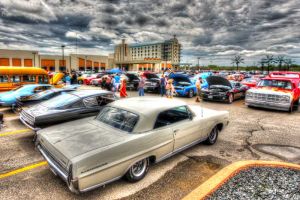
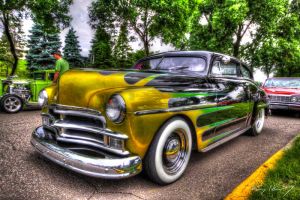
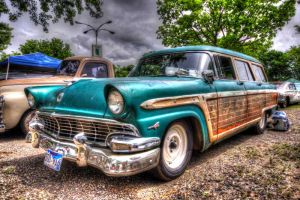
|
The
perfect Christmas gift for that hard-to-shop-for
car guy!
In an
ongoing effort to help finance our costs, we are
now offering limited production 24x36" poster
size prints. Printed on paper heavier than your
cheap department store poster, these can either
be hung as-are, or can be mounted/framed to your
taste.
Most of
these posters are processed in HDR to produce a
more artistic effect. Upon request, we can
provide these same images without the artistic
processing and/or in other sizes.
For all
the available prints, please visit our
Poster Page, or click one of the images.
On
Facebook and want to Share these images? They
can be found
here. |
|
After
much debating and essentially "taking a season off", we
are back. Or, at least, still here. We have gone with a
new host rather than do the hosting ourselves. This
means less money out of our pockets, but we do not yet
know how speed and reliability will be.
Despite the amount of money we have already poured into
the site and increasing health issues, we just couldn't
bring ourselves to shut the site down. Not only have we
provided the best coverage of local car shows, we have
proven beneficial to the car scene on whole.
We
discovered that the extension for the ban on leaded fuel
for racing was expiring, and spread the word, setting in
motion a drive the ultimately saw another extension
being implemented. We broke the story on the Sunday
Night Inspections, causing other media outlets to pick
up the story. The result of that was talks being
conducted between the car community and those operating
the inspections. The end result being a "backing off" of
those dragnet inspections, and the charities the car
community supports once again gaining from our hobby.
Our
position on feeling the need to responsibly report the
facts to the car community found us under fire from the
board of directors of M.A.A.C. at the time. Threats were
made. We were told we were "nothing". We were informed
that steps were being taken to ensure that lines of
communication were going to be hindered. That did not
happen. Because of our instance on being accurate with
our reporting, our contacts remain firmly in place.
Whether
related or not, this coincided with the start of a
change of direction with members clubs within M.A.A.C.
Other stories surfaced indicating that we weren't the
only ones to run afoul of M.A.A.C.'s BOD. The theory was
that only one entity should be talking with the "powers
that be" to represent the car community.
|
|
However,
about a decade had passed with no visible changes to
most of the car community, and the reality is that
M.A.A.C. could not count the majority of enthusiasts
within it's membership. The majority of the community,
in reality, had no representation. There are signs now
that with the recent changes on the M.A.A.C. BOD that
there may now be a better representation of the car
community.
We look forward to seeing what the future holds, and can
once more encourage all automotive enthusiasts to join
M.A.A.C., and help preserve and promote our hobby. We
are hoping that the new M.A.A.C. BOD understands that
having more than one voice can't hurt our cause. We are
also hoping that the car community itself can learn from
other areas that have already gone through what we are
going through, and understands that without political
pressure, we have no voice.
Back
to the site itself, other changes are going to be geared
more towards user input. Plans are to set up a photo
gallery where our visitors can upload and control their
own images. We won't be covering as many shows as we
have in the past. The real future of this site will be
in our visitor's hands.
As we
have about 20 GIGs of stuff already accumulated for the
site, uploading everything to our new host is going to
take some time. So if you see broken images or get 404
error messages, please be patient with us. We're
uploading as fast as we can.
As
time goes on, we will probably be playing around with
the format of the site, making it reflect more the "user
supported" platform we are hoping it will be.
As we
still have out-of-pocket expenses such as hosting fees,
we will still be looking to our visitors for support. We
hope that we can get our costs covered without having to
go the route of a pay site.
|